


Lebanon’s Political Economy and Hindrance to Development: The Dialectic of External Influence, Political Sectarianism, and the Unproductive Economy
Price range: 10 $ through 18 $
Price range: 10 $ through 14 $
AuthorNajib IssaDate15/5/2025No. of Pages400EditionFirstISBN978-614-498-387-4 E-ISBN978-614-498-388-1
| Weight | 0,600 kg |
|---|---|
| Dimensions | 24 × 17 cm |
| Product Type | Electronic, Paper |
The Center for Arab Unity Studies has published the book “Lebanon’s Political Economy and Hindrance to Development: The Dialectic of External Influence, Political Sectarianism, and the Unproductive Economy” by economic researcher Najib Issa.
The research in this book focuses on the actual reasons that have hindered balanced economic and social development in Lebanon, by monitoring the factors that have controlled the historical path of the country’s political and economic society. Since independence, this society has been based, and continues to be based, on two fundamental pillars: “political sectarianism” and “an unproductive economy,” both of which have been established and sustained by “other countries.” Therefore, it is no longer possible to track the path of the Lebanese economy, in terms of its structure and development performance, without examining the organic relationship that links it to the path of external factors and political sectarianism and their interaction.
In this context, the book shows how the economic model in the First Republic was based on the production of services for foreign interests and achieved, under the shadow of uncontrolled liberalism, continuous growth, but accompanied by profound economic and social imbalances and disparities between regions, classes, and sects, and a severe dependence on foreign countries. The book also shows how the interaction of these two factors, with the new direction each of them took in the Second Republic, has reproduced a new form of the unproductive free economic model, the predominant character of which is rentier and relies on external financial flows that feed production sectors that are not tradable in foreign markets. This model, in turn, was accompanied by economic and social imbalances and political conflicts that plunged Lebanon into a comprehensive, systemic political and economic crisis that continues to this day.

Add a review
You must be logged in to post a review.
You May Also Like
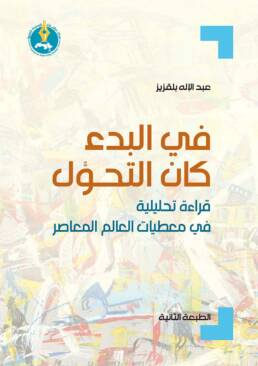
In the Beginning was the Transformation: An Analytical Reading of the Contemporary World
Price range: 10 $ through 11 $

Sudan-China Relations, 1956-2011
Price range: 13 $ through 21 $
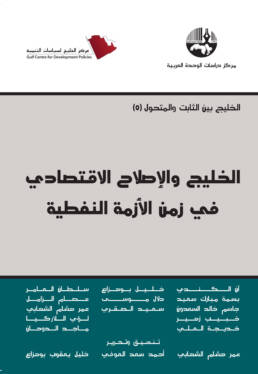
GCC and the Economic Reform during the Oil Crisis Era
Price range: 6 $ through 12 $
Life after Oil : The Survival Predicament of the Gulf Arab States
Price range: 8 $ through 16 $
Gaza: An Inquest into its Martyrdom
Price range: 9 $ through 14 $

Africa, Arabs and Colonization: Studies in Ali Mazrui’s Work
Price range: 6 $ through 10 $
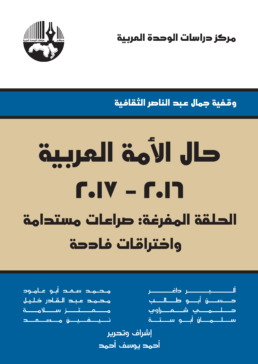
The State of the Arab Nation, 2016-2017: Permanent Conflicts and Fatal Penetrations
Price range: 5 $ through 7 $