

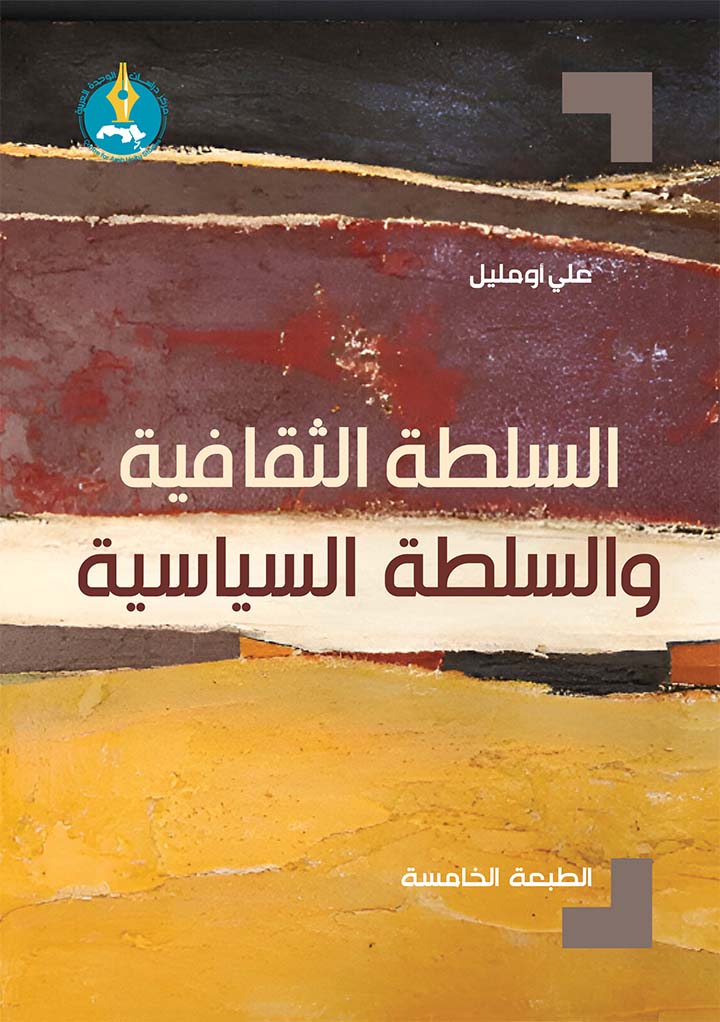
The Center for Arab Unity Studies published the fifth edition of the book Cultural Power and Political Power by Dr. Ali Omlil.
The subject of this book is the authority of “intellectuals.” Arab intellectuals claim for themselves that they are “leaders of thought,” and that they have a decisive role in the process of leadership and social and political change… In fact, the talk of Arab intellectuals about themselves carries two conflicting tones; On one hand, they see themselves as pioneers, as having a “message,” and as makers of awareness of change. But their speech also carries, on the other hand, a note of bitterness, as they usually lament the lack of recognition of their role- as if they do not have a significant impact on the reality of things, and they are not an effective element in influencing political decisions or public opinion.
The question here remains: What is the self-supporting basis of the Arab intellectual in his cultural heritage when he claims a role for himself or when he aspires to it? For whom was the scientific power and in whose name? What were its limits? And what are the mechanisms for regulating the relationship between the two authorities, the scientific and the political?
Arab writers wasted a lot of time when they ignored the issue of democracy or drowned it in things that were not part of it, or when they gave priority to other slogans such as unity, socialism and fighting imperialism, which are goals that naturally still exist if the matter means building an integrated and liberated Arab entity. However, our committed writers have become attached to everything except that which guarantees the practice of the “profession” of writing, which is democracy based on personal and public freedoms.

Add a review
You must be logged in to post a review.
You May Also Like
Comprehending the Judicious Qur’an: A Clear Exegesis According to the Sequence of Revelation (Part Two)
Price range: 10 $ through 12 $

The Arab Mind: An Ontology of Abstraction and Concreteness
Price range: 8 $ through 13 $

Comprehending the Judicious Qur’an: A Clear Exegesis According to the Sequence of Revelation (Part Three)
Price range: 10 $ through 12 $
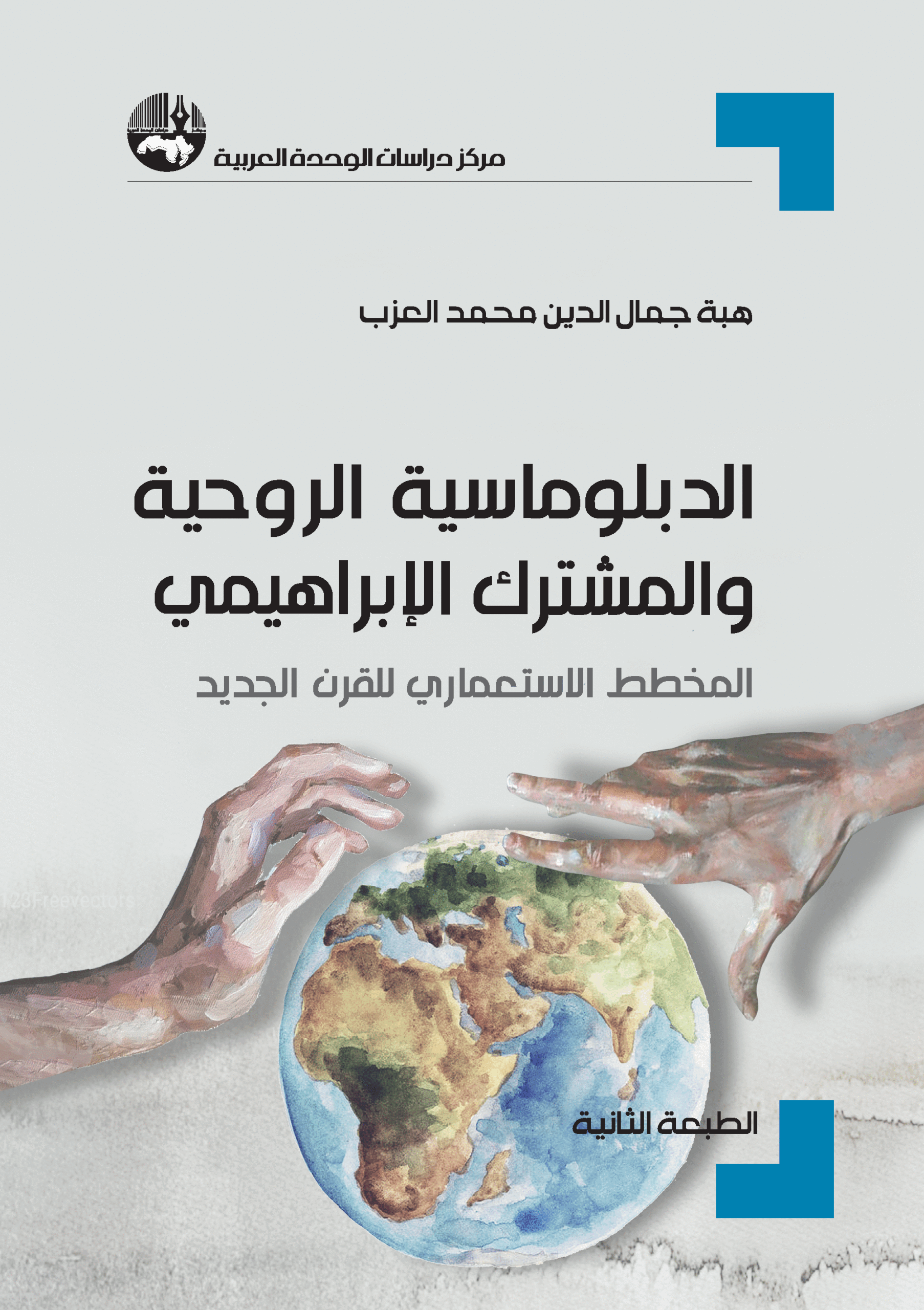
Spiritual Diplomacy and the Abrahamic Interfaith: Colonial Plan of the New Century
Price range: 7 $ through 11 $
Ibn Khaldun: An Intellectual Bioghraphy
Price range: 10 $ through 13 $
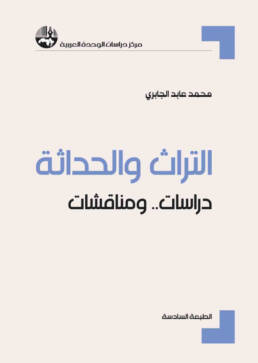
Heritage and Modernism: Studies and Discussions
Price range: 7 $ through 11 $

Pathways to Progress: Introductions to Foundations and Policies
Price range: 6 $ through 10 $