

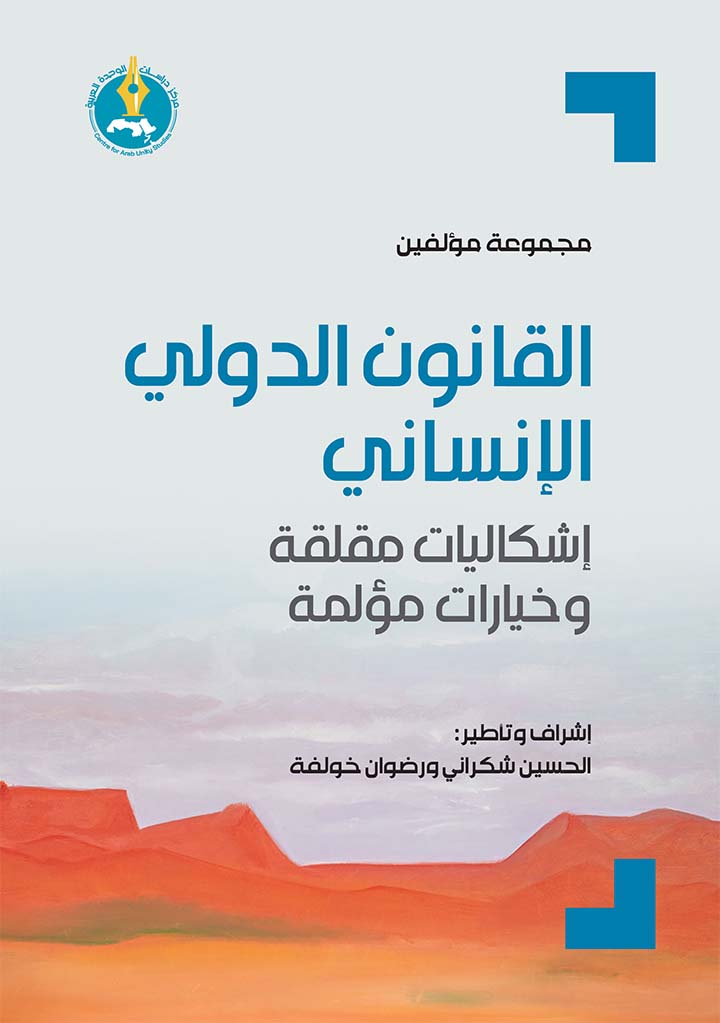
International Humanitarian Law: Troubling Issues and Painful Choices
Price range: 10 $ through 18 $
Price range: 10 $ through 14 $
Authorgroup of authors, supervision and framing: El-Hussein Chougrani and Radwan KhalfaDate12/1/2026No. of Pages352EditionFirstISBN9786144984291E-ISBN9786144984307
| Weight | 0,530 kg |
|---|---|
| Dimensions | 24 × 17 cm |
| Product Type | Electronic, Paper |
The Center for Arab Unity Studies has published the book International Humanitarian Law: Troubling Issues and Painful Choices by a group of authors (supervision and framing: El-Hussein Chougrani and Radwan Khalfa).
This book identifies the most important problems that hinder the practical implementation of international humanitarian law, and the difficulty of the options that are resorted to in light of the increasing violations and serious breaches of the core of human rights. The dominant powers on the international stage are constantly working hard to circumvent international law by invoking pretexts of national interest, self-defense, or fighting terrorism, etc. Therefore, it seems essential to question the extent to which international humanitarian law can protect victims of armed conflict, and to examine the efforts of states, the choices of individuals, and the authority of human conscience. It is also legitimate to question whether international humanitarian law needs mechanisms to ensure its implementation on the ground.
In the context of the spread of deliberate killing, the execution of cyber attacks and their potential impact on the operation of vital and sensitive civilian facilities, and the reliance on autonomous, self-operating weapons, such as drones, which have begun to raise troubling questions about the ability of the actor in the field of war to make the appropriate decision while taking into account the principles of proportionality and distinction, and the entry of private companies into battlefields and wars, and the spread of a spiral of violence and chaos, raises major questions that escape the control and oversight of international humanitarian law.
Faced with this complex landscape of armed conflicts, whether international, non-international, or hybrid, this book also addresses the contradictions that international justice has experienced regarding serious violations of the rules of international humanitarian law, in terms of the double standards used and the selective application subject to geopolitical calculations in holding violators of international rules accountable and prosecuting them. The book also attempts, from different angles, to identify the enormous gap that separates the scale of violations of international humanitarian law from the number of actual trials, and the extent to which this affects the ability of international justice to deter and reduce the culture of impunity.

Add a review
You must be logged in to post a review.
You May Also Like
Lt. General Saad El-Shazly: Testimonies and Documents
Price range: 10 $ through 13 $
Nonviolent Resistance: Studies in Nonviolent Struggle
Price range: 6 $ through 10 $

The State in the Contemporary Islamic Communities’ Thought in Morocco: Case Studies
Price range: 9 $ through 14 $
The Salafi Da’wah of Alexandria: Paths of Organizations and Outcomes of politics
Price range: 5 $ through 8 $
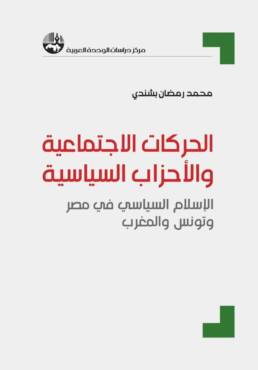
Social Movements and Political Parties: Political Islam in Egypt, Tunisia, and Morocco
Price range: 8 $ through 13 $
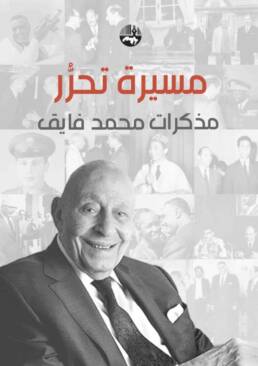
Liberation Journey: Memoirs of Mohamed Fayek
Price range: 9 $ through 14 $

Pages of my struggle: Memoirs of George Habash
Price range: 10 $ through 16 $