


The Salafi Da’wah of Alexandria: Paths of Organizations and Outcomes of politics
Price range: 5 $ through 10 $
Price range: 5 $ through 8 $
AuthorAhmad Zaghloul ShlatahDate30/1/2016No. of Pages208EditionfirstISBN9789953827308E-ISBN9786144982785
| Weight | 0,325 kg |
|---|---|
| Dimensions | 17 × 24 cm |
| Product Type | Electronic, Paper |
This book seeks to assess the experience of the Salafi call, the circumstances of its formation and composition as a social movement, its network of interconnected relations, relevant phases of its development, and the instruments employed to spread and expand itself, which accounts to the great momentum it achieved since the onset of 2011 – a variety of tools which include the use of readings on the movement’s practical positions and its intellectual and juristic conceptions, and its use of partisan-oriented actions. The book also discusses future possible outcomes of Salafi movement in Egypt and the extent to which the organization can continue to act as a political representative of Islamists, especially following the ban of the Muslim Brotherhood.

Add a review
You must be logged in to post a review.
You May Also Like

Islamic Fundamentalism: The Story of Islamist Movements
Price range: 8 $ through 13 $

The Scourging of Iraq : Sanctions, Law and Natural Justice
Price range: 8 $ through 15 $
The Constitutional Issue and Managing the Difference between Sharia and Law
Price range: 10 $ through 32 $
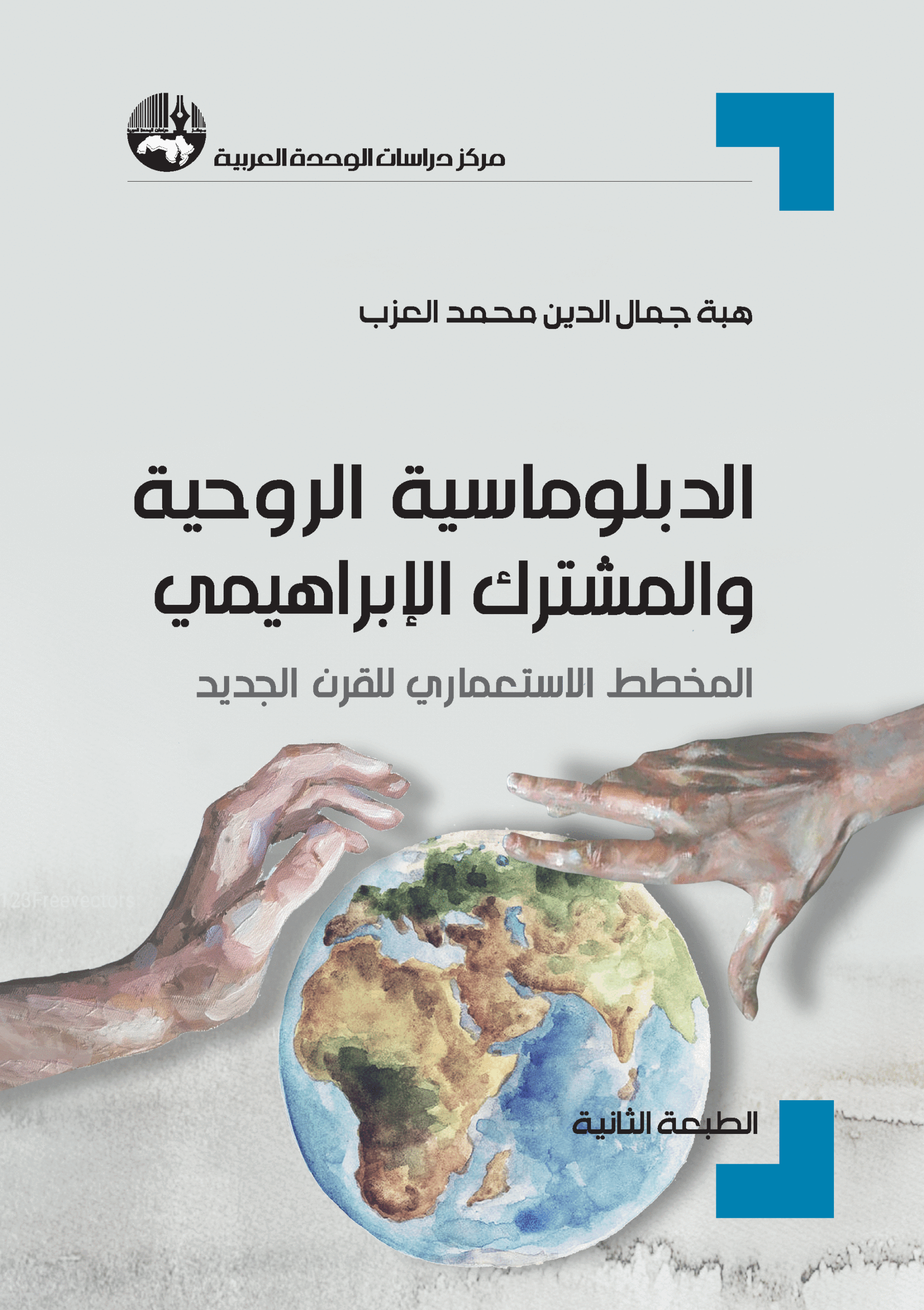
Spiritual Diplomacy and the Abrahamic Interfaith: Colonial Plan of the New Century
Price range: 7 $ through 11 $

Nationalism and Modernization: Studies in Nationalist Thought and the Process of Modernization in the Contemporary Morocco
Price range: 6 $ through 10 $

Constitutional Experience of Oman
Price range: 10 $ through 11 $