


The Center for Arab Unity Studies published the thirteenth edition of the book The Arab Political Reason: Its Delimitation and Manifestations by Dr. Mohammed Abed al- Jabri.
With the increasing preoccupation with questions and attempts to answer the reasons for the failure of the Arab renaissance, the Arab thinker, Muhammad Abed Al-Jabri, is heading in an unprecedented search for those answers, knocking on the door of the Arab reason in search of factors that hindered the rise of this reason in preparation for the establishment of an actual integrative Arab renaissance project.
Al-Jabri engages in research into the working mechanisms of this reason, its determinants and components, not as an intellectual, theoretical and cognitive storehouse for various issues, topics and problems in which Arab thought has worked since the late nineteenth century at least until today, but rather as a tool for thinking about those issues, and as a tool for the production of knowledge. Thus, it is a tool for reproducing the Arab-Islamic culture, whose elements, trends and contradictions, in turn, contributed to defining the components of this reason at its various levels (knowledge, political and value), providing a critical structural reading, and a comprehensive review of its mechanisms, concepts, perceptions and visions.
Al-Jabri produced this huge foundational intellectual work for the “Criticism of the Arab Reason” in a series of books consisting of four parts, in which the work took more than twenty years. It searched in the formation of the Arab Reason, its structure, the Arab political Reason and the Arab Ethical Reason.
In this third part of the “Criticism of the Arab Reason” series of books, Al-Jabri moves from the criticism of the theoretical reason in the Arab-Islamic culture, i.e. the grammatical reason, the rhetorical reason, the verbal reason and the philosophical reason, to the criticism of the practical reason, i.e. the Arab political reason, or what Al-Jabri calls “the mind of Arab reality”; focusing on the determinants of political practice and its manifestations in the Arab-Islamic civilization, identifying three mechanisms that governed political action in the Arab-Islamic society following the “profit Mohammad’s call”, namely belief, tribe and booty, which parallel the mechanisms of ideology, fanaticism and interest in modern societies. This part deals with the struggle for power, relations and contradictions that the Arab society witnessed after the “profit Mohammad’s call” through these mechanisms.

Add a review
You must be logged in to post a review.
You May Also Like

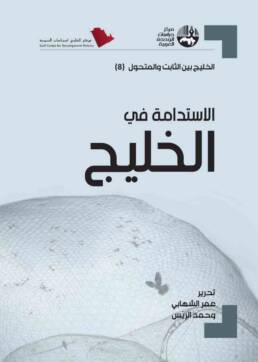
Sustainabilty in the Gulf
Price range: 8 $ through 13 $
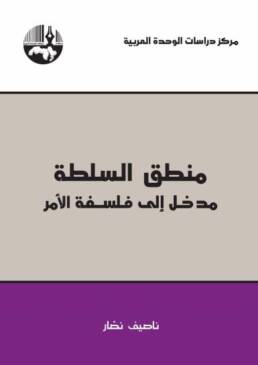
The Logic of Power : An Introduction to the Philosophy of Order
Price range: 11 $ through 18 $
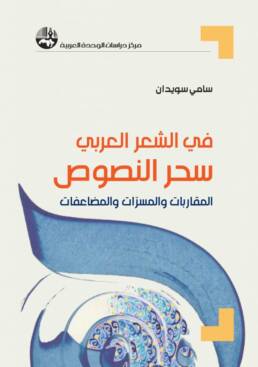
In Arab Poetry: Seduction of Texts: Approaches, Pleasures and Consequences
Price range: 8 $ through 13 $
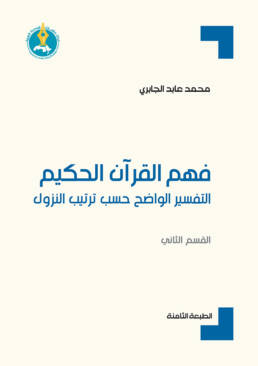
Comprehending the Judicious Qur’an: A Clear Exegesis According to the Sequence of Revelation (Part Two)
Price range: 10 $ through 12 $

Women in Arts and Media: From Stereotyping to Change
Price range: 8 $ through 13 $
Citizenship in GCC Countries
Price range: 8 $ through 13 $